
Reporting: sourced factual coverage reviewed by the editorial desk.
Shinhan Card says it is preparing a token payment test for employees at a merchant in its headquarters, using blockchain infrastructure provided by South Korean digital-asset company Dunamu. The experiment places a card issuer’s own token into an ordinary store checkout, but access is limited to participating staff rather than the general public.
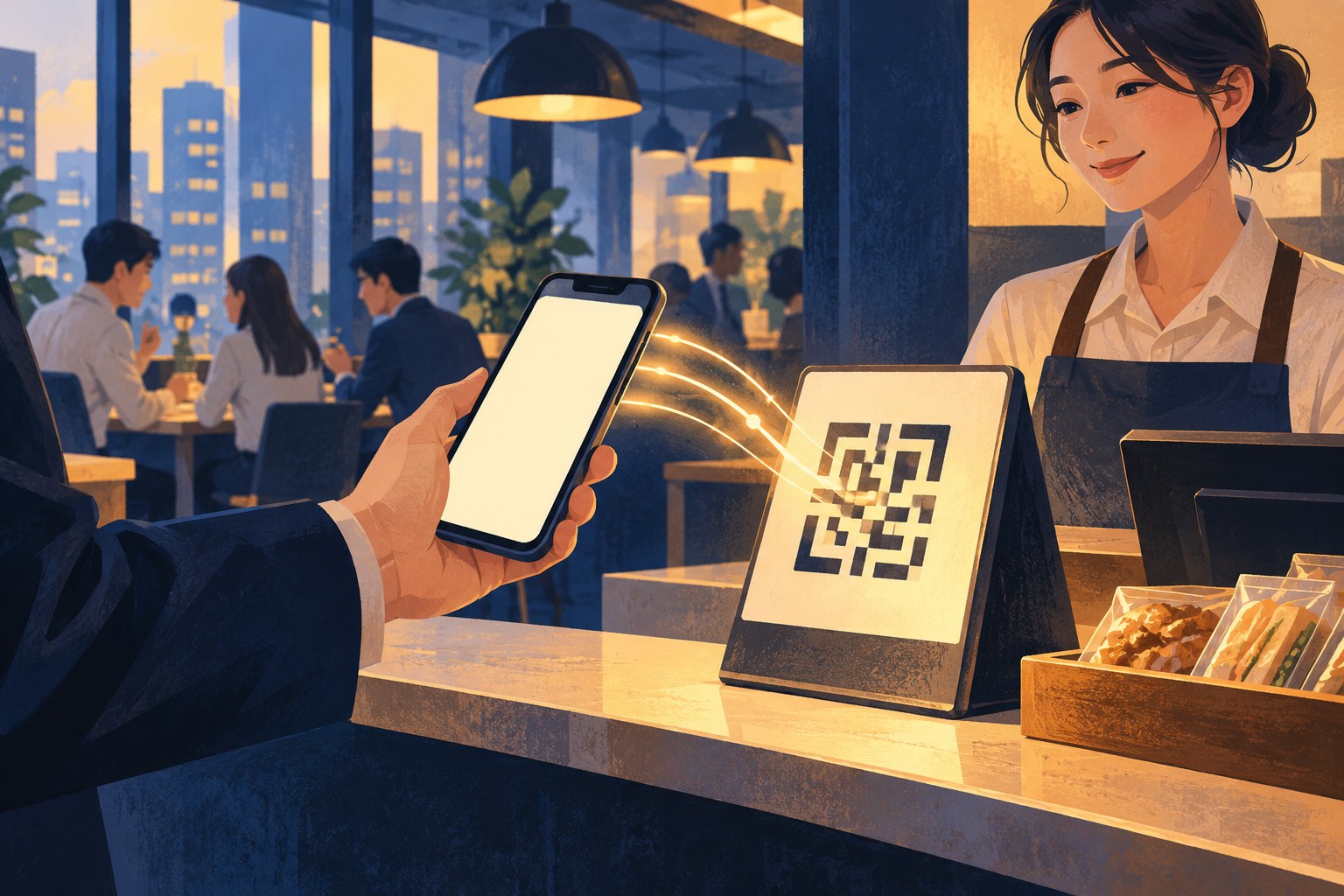
In a Korean-language announcement issued October 27, Shinhan said employees will receive a token it issues on Dunamu’s public GIWA Chain through the GIWA Wallet app. They will scan a QR code displayed at the store to pay. Dunamu supplies the network; Shinhan issues and operates the token. The company describes the test as a way to examine blockchain payments in a physical retail setting.
The distinction for customers is the narrow scope. The announcement concerns a workplace test at a headquarters merchant, not a payment option rolled out to Shinhan cardholders or merchants across South Korea. It does not give transaction counts, the number of participating employees, a public launch date or independent evidence of performance. The release calls the payment instrument a token; it does not establish that this particular test token is a regulated won stablecoin.
Shinhan says the design checks employee status onchain with GIWA’s Dojang technology and allows payments only from registered wallets. Those are the issuer’s descriptions of the intended access controls. The test is also meant to examine security and compliance requirements; a controlled pilot does not by itself prove those protections will work at scale.
The card company says it intends to expand participating merchants and connect global blockchain networks in stages, and wants to be positioned for commercialization once legislation is complete. Those are future plans, not evidence that the service is broadly available or approved. Shinhan also mentions earlier blockchain and stablecoin proofs of concept and partnerships, but the new release does not say this GIWA test runs on Solana or uses a particular public crypto asset.
For readers, the experiment is a practical test of a familiar checkout with a different settlement path: the merchant presents a QR code while a permissioned group of staff uses wallet-held tokens. What remains to be shown is how the workflow performs, what rights or redemption terms attach to the tokens, and whether it can move beyond a controlled workplace setting.
Sources & evidence
Shinhan Card — October 27 company announcement in Korean ↗
Author disclosure
AI assisted translation, research, drafting and review of Shinhan Card’s Korean-language release. RailsRecord did not attend the test, interview participants or independently verify transactions. RailsRecord is a Joaico publication; material publisher holdings have not been established.
Corrections
Identify this article and the disputed claim in a correction request to corrections@railsrecord.com ↗. The publisher reviews supporting primary evidence.
Reader discussion
Comment on this article or reply to another reader. Comments and replies are held for review before appearing publicly.
Loading discussion…